
GuideFor shoppers·September 4, 2026
Cook the Whole Vegetable: Roots, Stems, and Leaves
Those beet tops and broccoli stems you've been tossing? They're some of the best eating in the box. Here's how to use them.
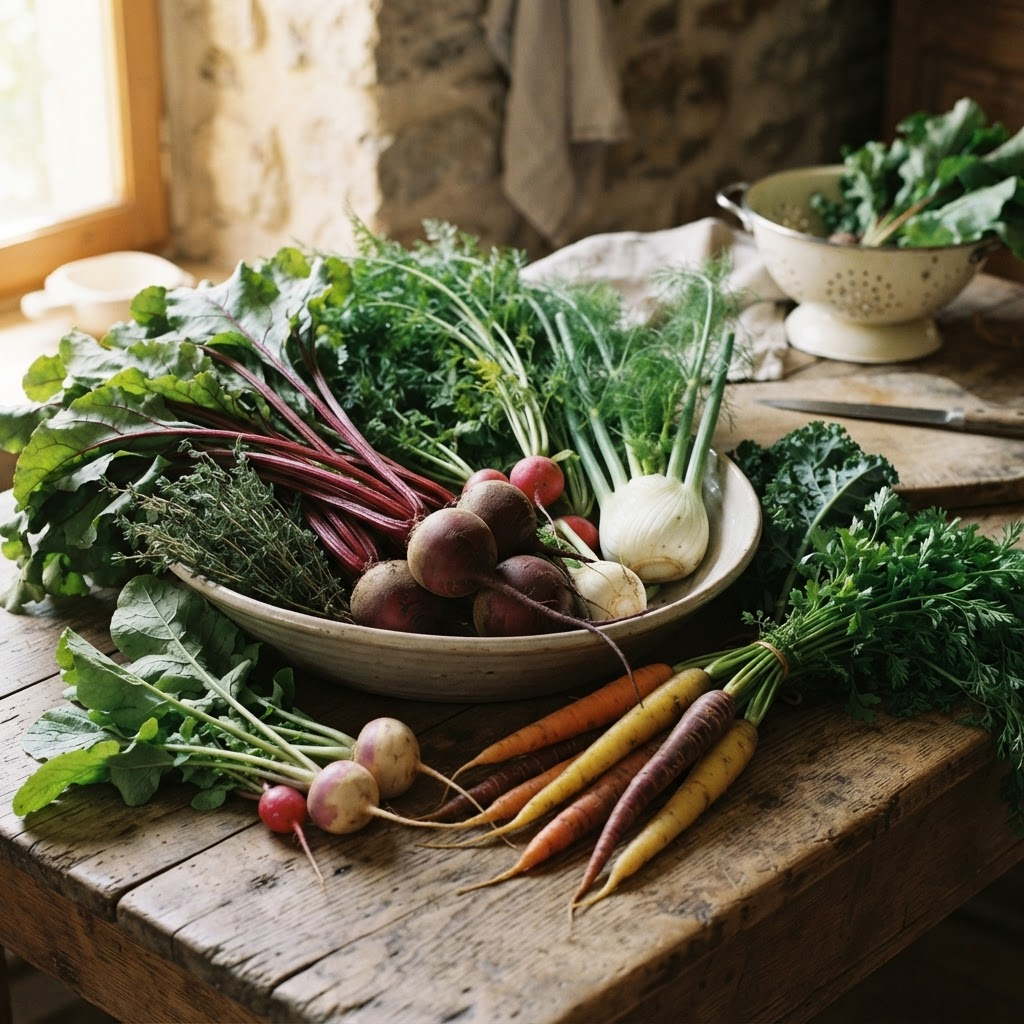
When your vegetables arrive fresh and whole — tops, stems, and all — you're getting more food than you might realize. Much of what gets tossed is delicious and nutritious. Here's how to use the whole plant.
Leafy tops The greens on beets, carrots, radishes, and turnips are all edible and tasty. Beet and turnip greens cook like chard; carrot tops make a punchy pesto or herb sauce; radish tops blend into soups. Treat them as a second vegetable that came free with the first.
Stems and stalks Broccoli and cauliflower stems are sweet and crunchy once you peel the tough outer layer — slice and roast or add to a stir-fry. Chard stems can be sautéed like celery. Herb stems (cilantro, parsley) carry huge flavor and belong in the pot.
Peels and trimmings Well-scrubbed vegetable peels roast into crisps or go straight into a stock bag. Onion skins, carrot ends, and mushroom stems build a rich homemade broth for free.
A few easy habits - Keep a freezer bag for scraps and make stock whenever it's full. - Separate leafy tops from roots when you get home so both keep longer. - Think of each vegetable as two or three ingredients, not one.
Using the whole vegetable stretches your grocery budget, cuts waste to almost nothing, and honors the work your growers put into every plant.
Share this post
Ready to taste the difference?
Shop fresh from local growers near you — order today, harvested to order.
Shop the market